- RecommendProduces advice or content
- Evaluate and trace
- Does not commit a business action
USE CASES
One AI control gap.Different consequences.
Choose the outcome you own. The missing connection between approval, execution and evidence remains the same.
Start with the role. Follow the workflow. Connect every outcome to proof.
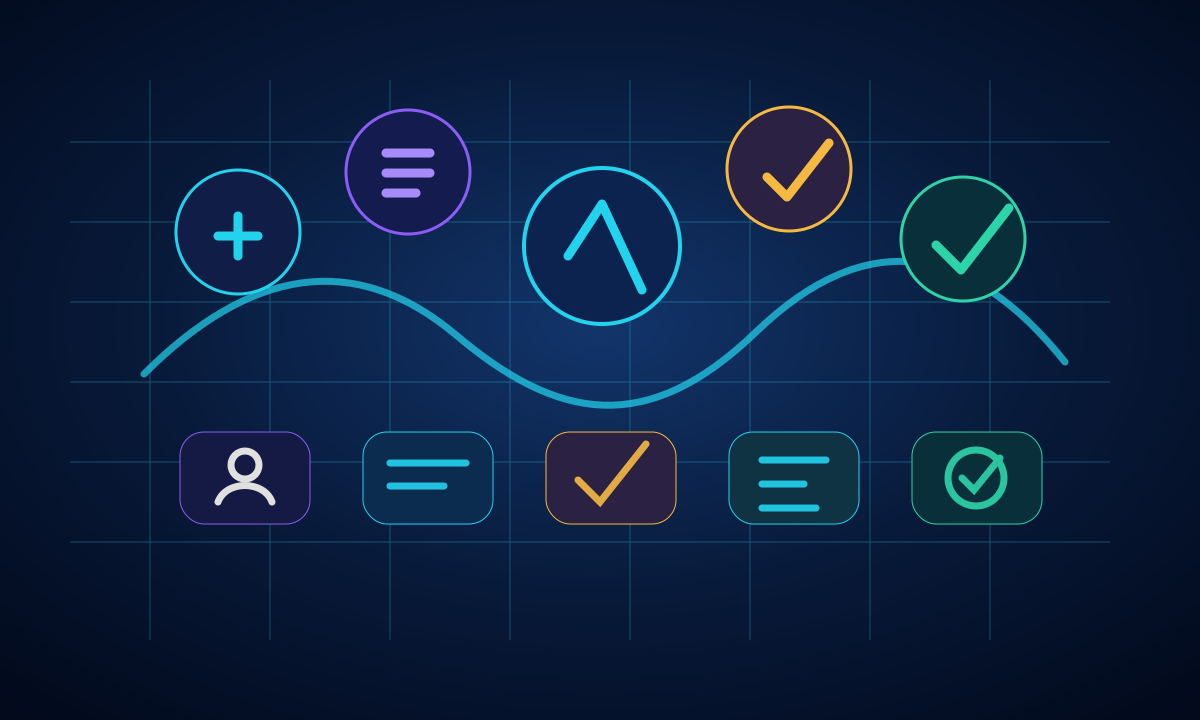
- Enterprise
- Risk
- Platform
- Security
- Operations
- Approved design
- Governed execution
- Connected evidence
- Business outcome
The challenge changes by seat. The missing connection does not.
Every team needs a trustworthy connection between what was approved, what executed, why it was permitted and what outcome followed.
ROLE LENS
Choose the outcome your team owns.
ENTERPRISE LEADERS
Scale AI without losing accountability.
The challenge
AI investment is growing faster than confidence in how production workflows are controlled.
The consequence
Adoption slows when operating cost, ownership and proof of outcomes remain fragmented.
How AI Evidence Plane responds
Connect workflow control, owners, operating signals and outcome evidence.
- Controlled scale
- Clear accountability
- Cost per successful outcome
ENTERPRISE LEADERS
ENTERPRISE LEADERS
Scale AI without losing accountability.
The challenge
AI investment is growing faster than confidence in how production workflows are controlled.
The consequence
Adoption slows when operating cost, ownership and proof of outcomes remain fragmented.
How AI Evidence Plane responds
Connect workflow control, owners, operating signals and outcome evidence.
- Controlled scale
- Clear accountability
- Cost per successful outcome
RISK & COMPLIANCE
RISK & COMPLIANCE
Turn approval into production proof.
The challenge
Approvals often live in documents while execution evidence is distributed across operational systems.
The consequence
Review teams cannot easily demonstrate that the approved workflow is the workflow that actually ran.
How AI Evidence Plane responds
Compare approved design with observed production execution and evidence.
- Approved versus executed
- Evidence-ready review
- Governed change
AI & PLATFORM TEAMS
AI & PLATFORM TEAMS
Create one repeatable path to production.
The challenge
Prompts, models, tools, policies and evaluations are frequently managed through bespoke engineering paths.
The consequence
Integration effort, configuration drift and release friction increase as AI applications scale.
How AI Evidence Plane responds
Connect configuration, testing, approval and controlled promotion.
- Faster configuration
- Earlier validation
- Versioned promotion
SECURITY TEAMS
SECURITY TEAMS
Control consequential actions before commit.
The challenge
An agent may propose tool or business actions beyond its intended authority or operating boundary.
The consequence
Unauthorised actions may occur before teams can reconstruct what was permitted and why.
How AI Evidence Plane responds
Apply policy, evaluation and approval before consequential commit.
- Permitted actions
- Approval before commit
- Investigation evidence
AI OPERATIONS & RELIABILITY
AI OPERATIONS & RELIABILITY
Connect failure to controlled recovery.
The challenge
A model alert does not necessarily reveal which business workflow failed or whether remediation succeeded.
The consequence
Incidents take longer to investigate, corrective changes are harder to verify and operating cost remains unclear.
How AI Evidence Plane responds
Link alerts to affected workflows, evidence and controlled recovery.
- Faster investigation
- Controlled recovery
- Cost visibility
CONTROL DEPTH
Apply control in proportion to consequence.
A recommendation, a prepared action and a committed action should not carry the same authority.
More consequence requires stronger authority, evaluation and proof.
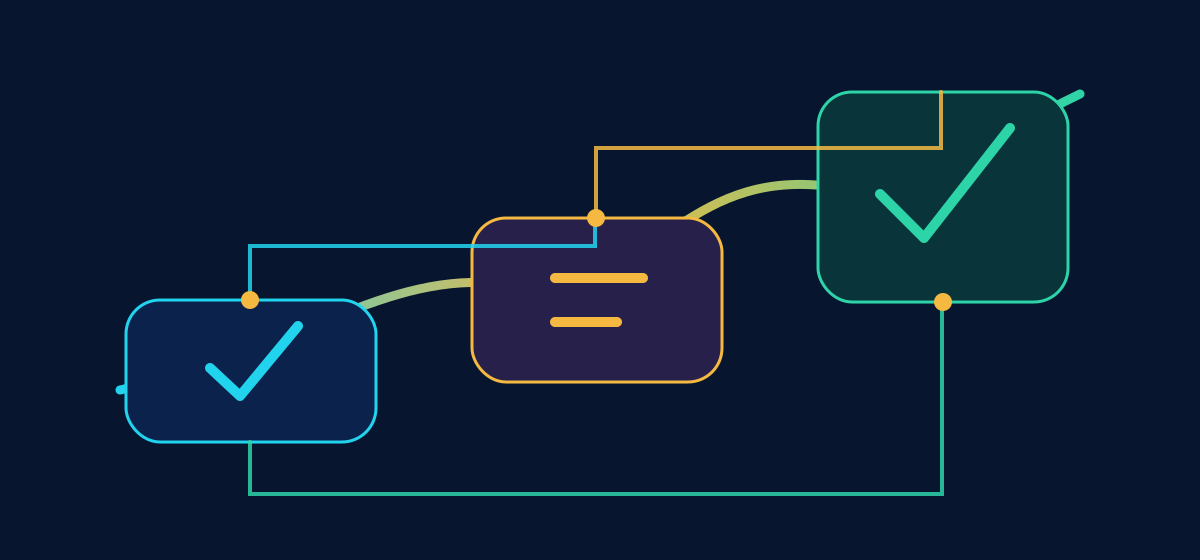
- Recommend
- Prepare
- Commit
- Evaluate and trace
- Policy and approval
- Fail-closed commit
- PreparePrepares a proposed action
- Apply tool, policy and approval controls
- Preserve what was proposed and approved
- CommitCauses a consequential business action
- Require commit authority and fail-closed control
- Preserve why it was permitted and what followed
COMMON STARTING POINTS
Start where consequence and uncertainty meet.
Each pathway begins with one production or near-production workflow.
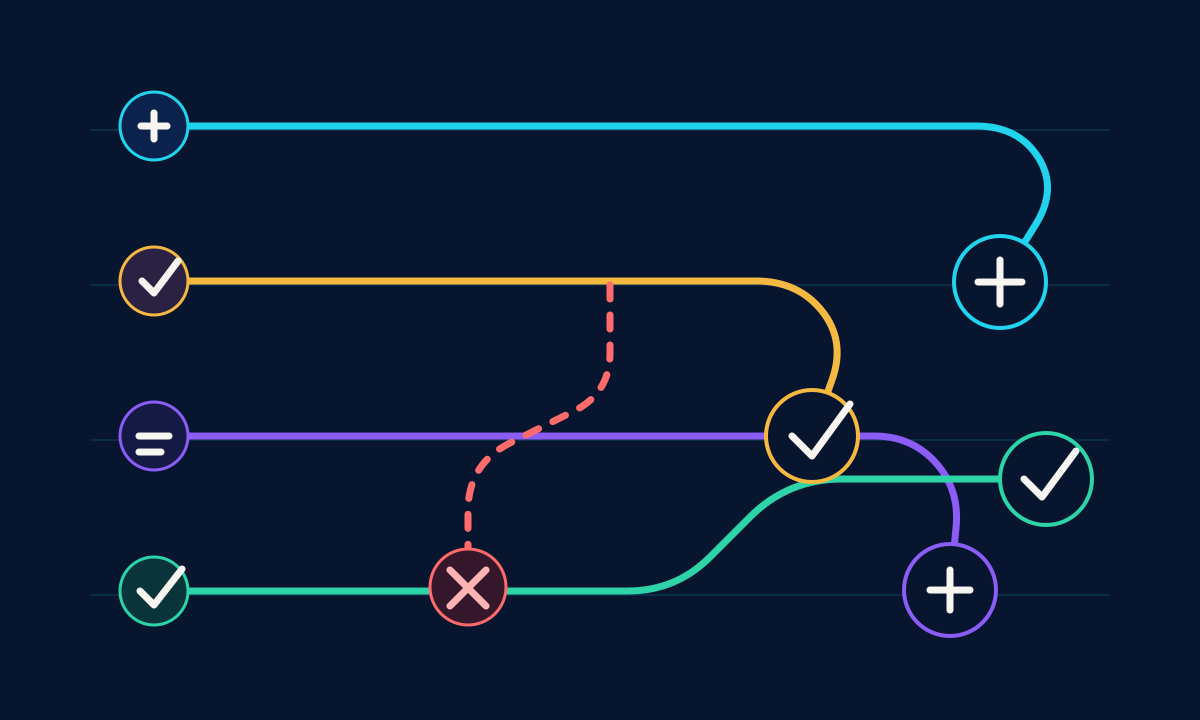
- Governed Execution
- Governance Assurance
- Build & Release
- AI Operations
- Remediation
Governed Execution with Remediation
Challenge: A consequential action must pass required controls before commit.
Control approach: Propose -> Prepare -> Evaluate -> Approve -> Commit
Evidence: Execution decision, policy result, approval and remediation remain connected.
AI Governance and Assurance
Challenge: Policy documents and design approval do not prove production behaviour.
Control approach: Compare approved design with observed execution.
Evidence: Trace, governance and Evidence Graph stay tied to the workflow instance.
AI Platform Build and Release
Challenge: AI configuration changes move through fragmented engineering and review paths.
Control approach: Build -> Test -> Evaluate -> Approve -> Promote
Evidence: Configuration versions, evaluation results, approval and promotion decision.
AI Operations and Reliability
Challenge: Operational signals are disconnected from workflow decisions and business outcomes.
Control approach: Detect -> Investigate -> Contain -> Remediate -> Re-evaluate
Evidence: Affected runs, operating context, remediation decision and verified recovery.
ONE WORKFLOW. SHARED ACCOUNTABILITY.
Give every team the evidence it needs without creating separate truths.
The same production workflow connects design, approval, operation and review.
Access follows role and object permissions.
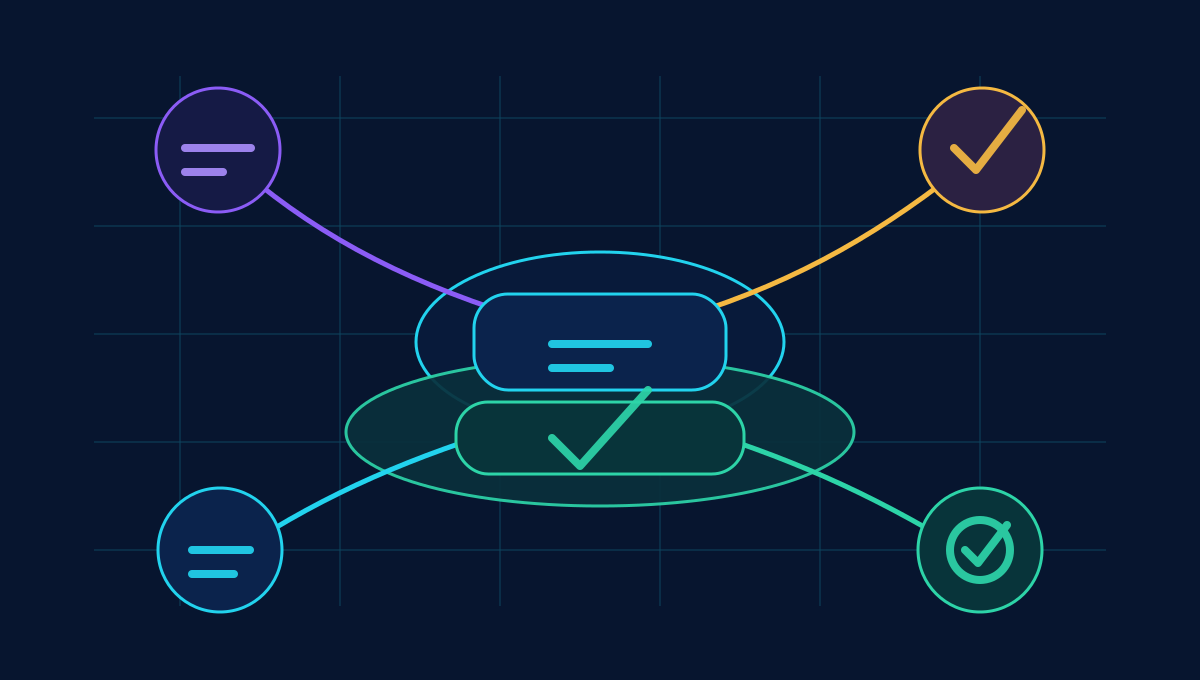
- AI & Platform Teams
- Security & Risk
- Operations
- Enterprise Leaders
- One governed workflow
- One connected evidence model
WHERE TO START
Choose one consequential workflow.
The strongest first pilot is real enough to matter and bounded enough to prove.
Start narrow. Prove the operating model. Expand the pattern.
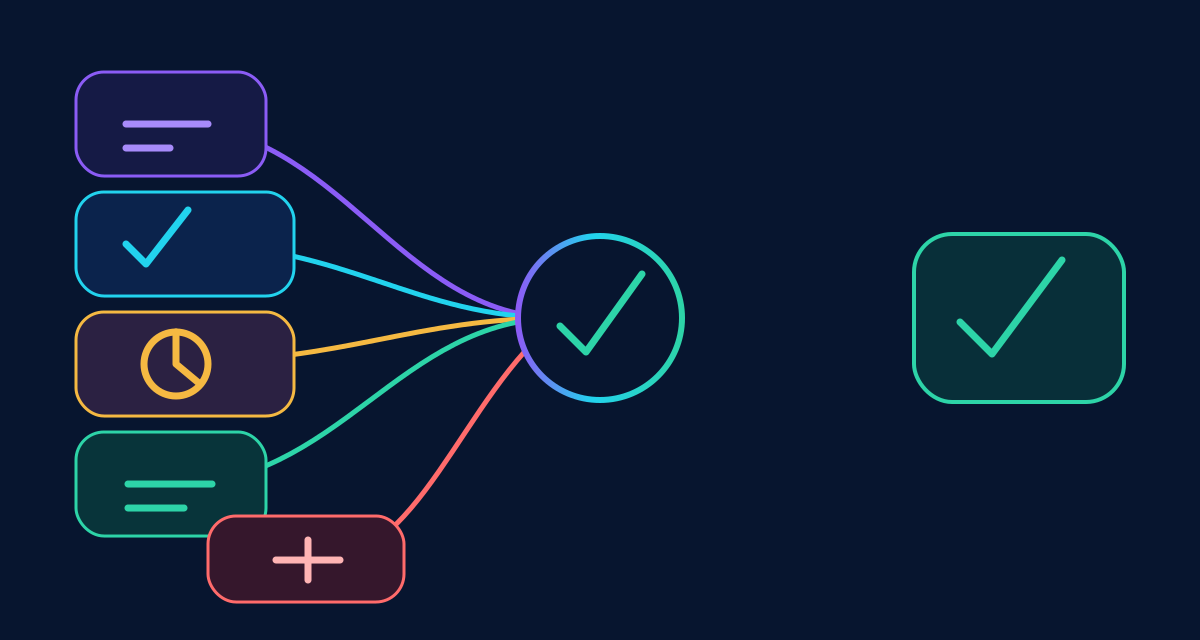
- Production or near-production
- Clear business owner
- Consequential action
- Measurable outcome
- Execution signals
- Selected workflow
DESIGNED TO ENABLE
Outcomes that executives can inspect.
- Faster responsible adoption
- Clearer accountability
- Fewer unauthorised actions
- Shorter recovery
- Evidence-backed decisions
DESIGN-PARTNER PILOT
Bring one consequential workflow. Leave with its control and evidence map.
Map the approved design, execution controls, operational signals and proof required to expand responsibly.
Discuss one workflow