AI Operations
Operate AI workflows by outcome—not model calls.
Track quality, reliability, latency, token cost and remediation across every production run.
Operational signals become useful when they connect to the workflow, decision and outcome behind them.
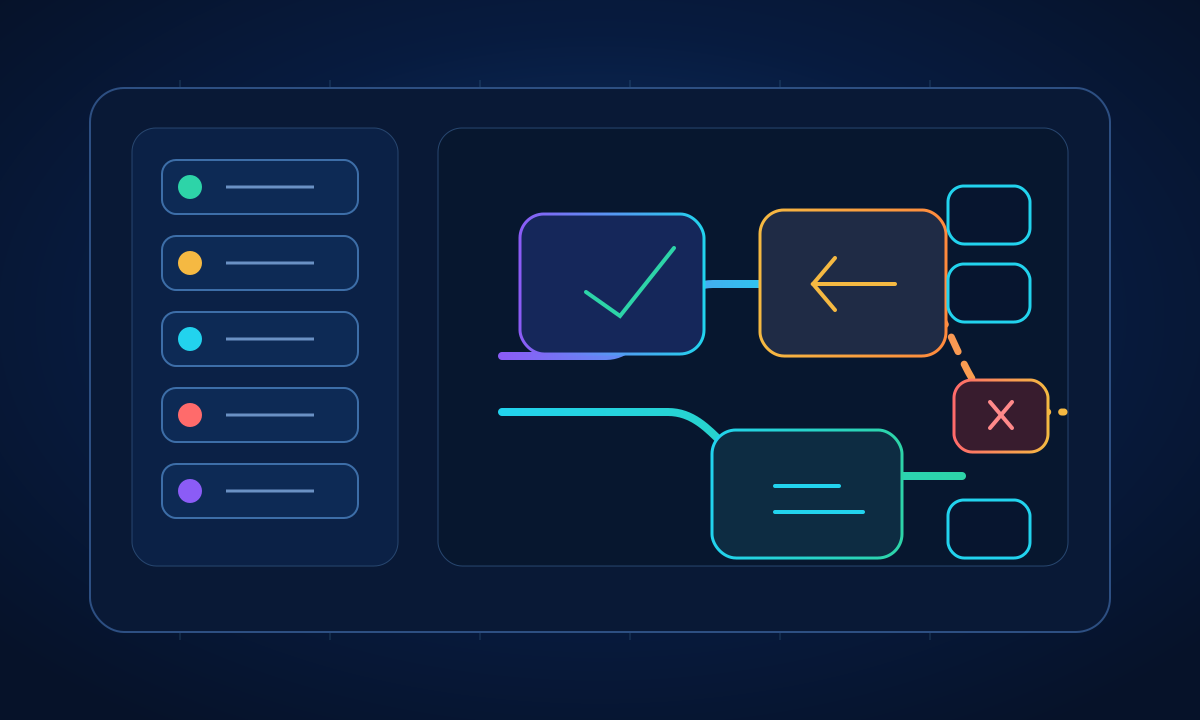
- Claims review workflow
- Attention required
- Outcome success
- Evaluation quality
- p95 latency
- Cost per successful outcome
- Human review
- Contained run
- Execution Trace
- Governance Trace
- Evidence Graph
- Claims review workflowProduction run under observation.
- Attention requiredOutcome, quality, latency, cost and review signals are connected.
- Affected workflow instanceThe alert points to one run, not a generic model call.
- Trace bundleExecution Trace · Governance Trace · Evidence Graph
Model telemetry shows that something changed. Connected evidence shows where, why and what followed.
Relate operational change to the exact workflow instance, configuration, governance decision and outcome.
Explore Connected EvidenceWorkflow-Level SLOs
Measure whether the workflow delivered the intended outcome.
Define objectives around successful completion, evaluated quality, latency, cost, approval and remediation.
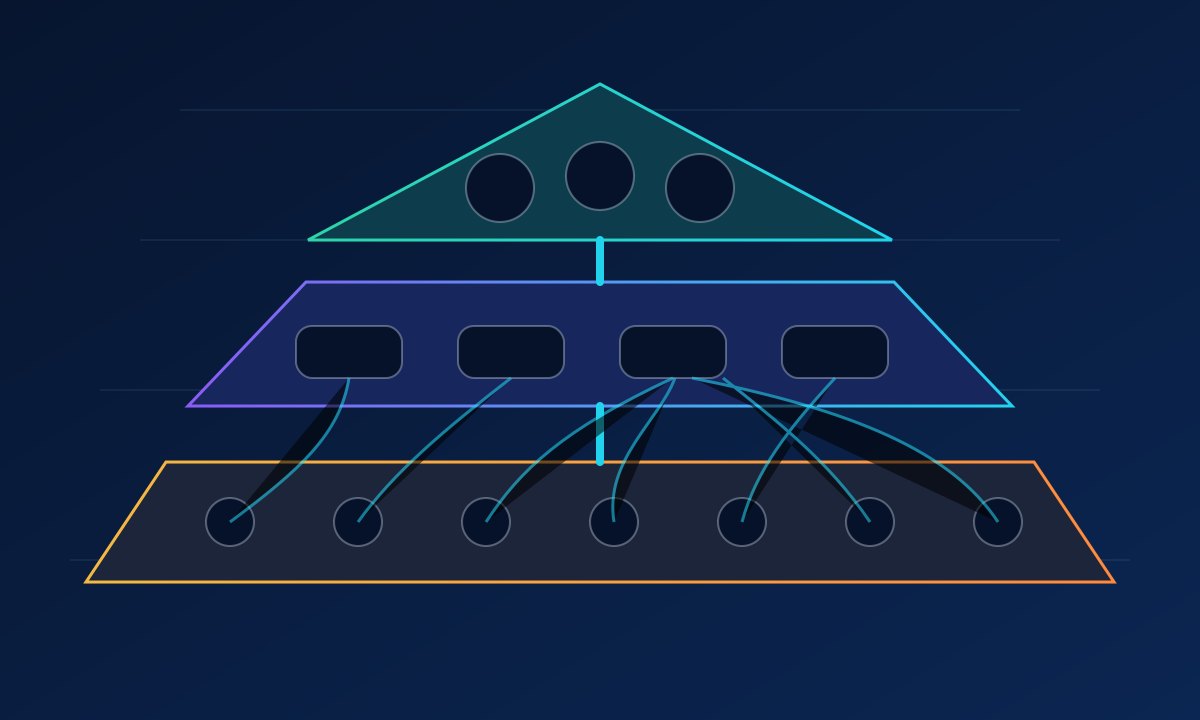
- Business outcome
- Successful outcome
- Action completed
- Human review completed
- Workflow SLO
- Completion
- Evaluation pass
- p95 latency
- Cost per outcome
- Remediation rate
- Supporting signals
- Business outcomeSuccessful outcome · Action completed · Human review completed
- Workflow SLOCompletion · Evaluation pass · p95 latency · Cost · Remediation
- Supporting signalsAgent binding · Agent execution · Model call · Tool action · Policy · Approval · Tokens
- Connected evidenceSignals explain the workflow objective.
Operate the workflow the business depends on—not isolated technical calls.
Alert To Evidence
Move from a signal to the affected run.
Follow an SLO breach to the workflow instances, configurations and decisions behind the change.
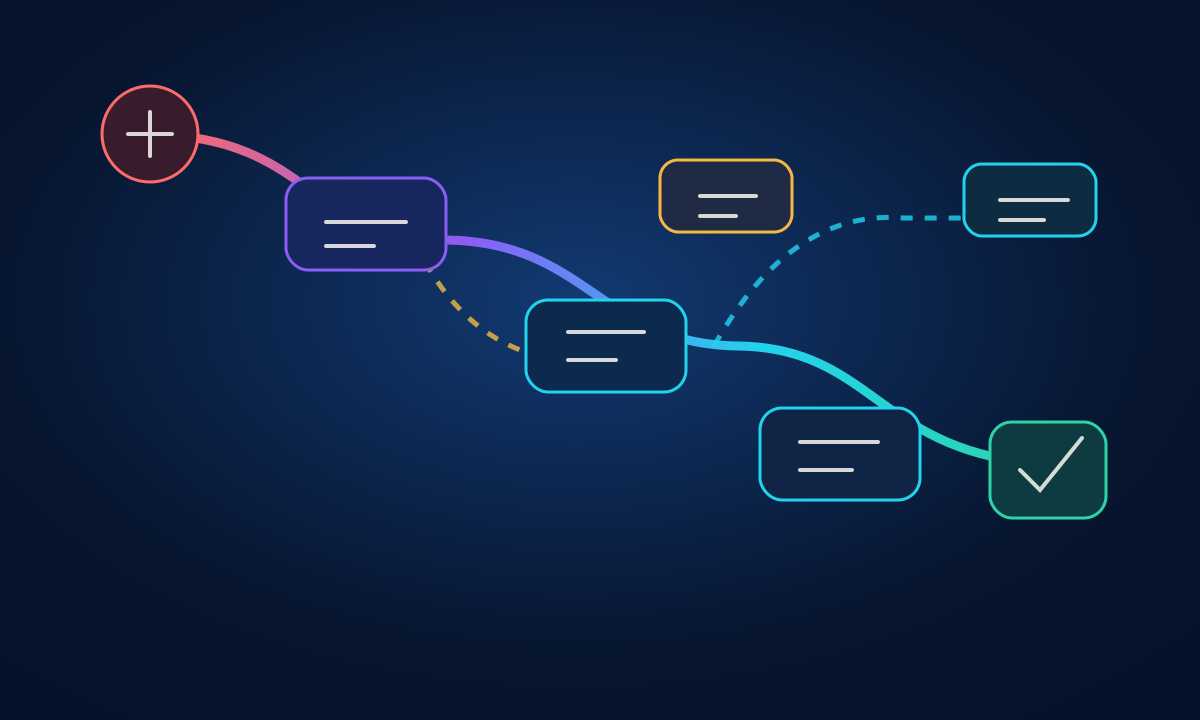
- SLO breach
- Affected workflow instances
- Observed configuration
- Execution Trace
- Governance Trace
- Evidence Graph
- Investigation context
- Responsible owner
- SLO breach
- Affected workflow instances
- Observed configuration
- Execution Trace
- Governance Trace
- Evidence Graph
- Investigation context
- Responsible ownerApplication, platform, reliability or risk owner.
- Application owner
- AI platform team
- Reliability team
- Risk or policy owner
- Workflow
- Affected run
- Severity
- Evidence link
- Required action
An alert should lead to evidence—not another disconnected dashboard.
Governed Recovery
Remediate without creating a second incident.
Contain the affected path, apply an approved remediation, re-evaluate and restore only when the workflow passes.
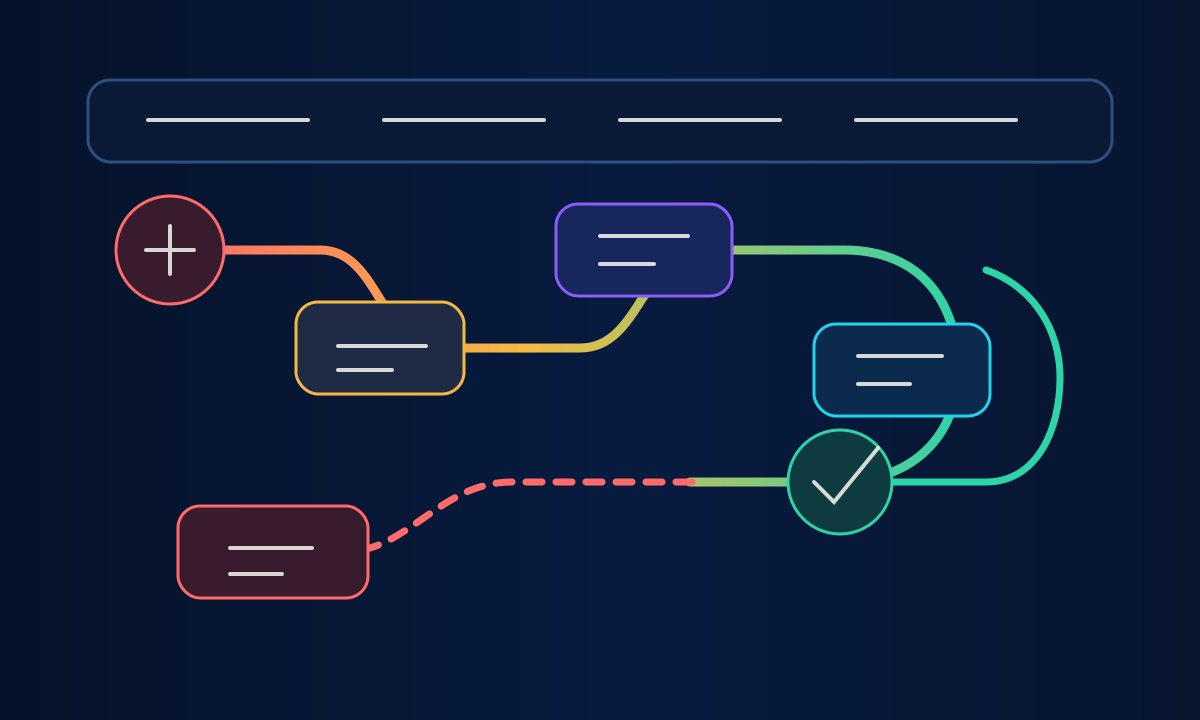
- Detect
- Contain
- Select approved remediation
- Apply remediation
- Re-evaluate
- Verified recovery
- Restore governed path
- Remain contained
- Recovery authority
- Detect
- Contain
- Select approved remediation
- Apply remediation
- Re-evaluate
- Pass: verified recoveryRestore governed path.
- Fail: remain containedReview or repeat approved remediation.
Contain first. Change under authority. Prove recovery.
Token And Model Economics
Track cost against successful outcomes.
Compare token use, latency and model cost with evaluated quality—not requests alone.
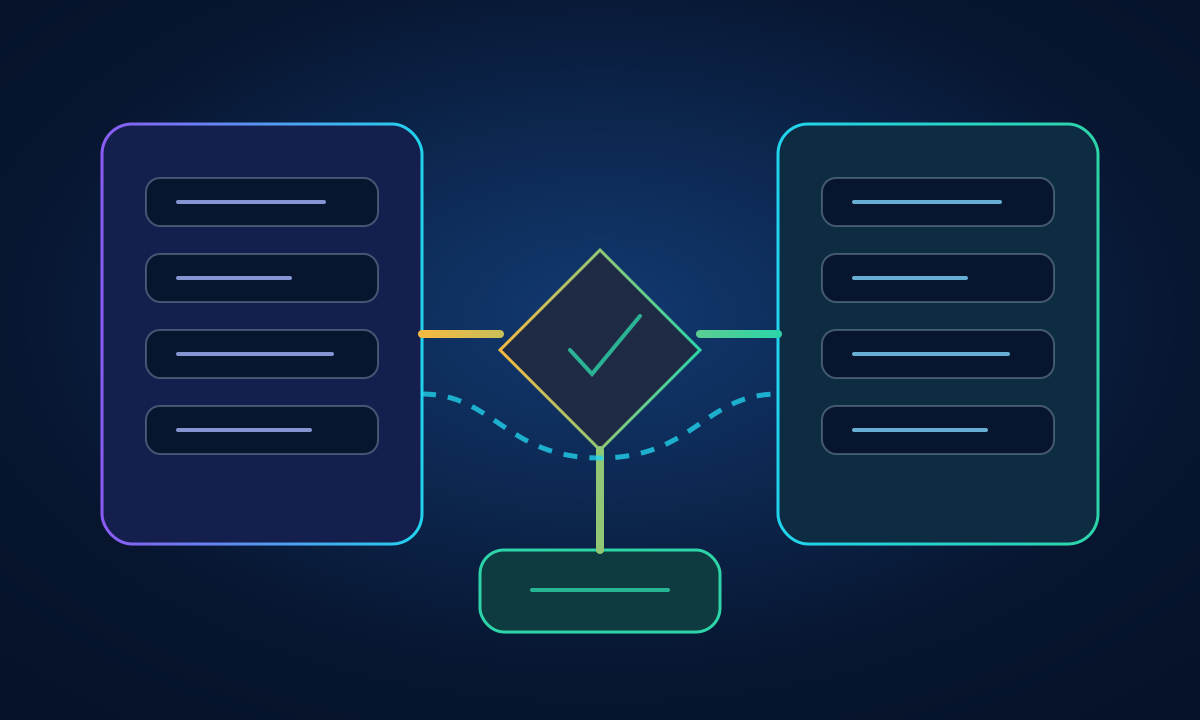
- Configuration A
- Model and prompt version
- Token consumption
- Latency
- Evaluation result
- Quality threshold
- Cost per successful outcome
- Configuration B
- Model and prompt version
- Token consumption
- Estimated model cost
- Successful outcome
- Configuration AModel, prompt, tokens, latency and cost context.
- Quality threshold
- Outcome economics
- Configuration BCompared against the same quality requirement.
- Quality threshold
- Outcome economics
- Comparison decisionQuality must pass before cost decides preference.
Quality threshold must be met before cost comparison determines preference.
Explore Build & ReleaseThe lowest token cost is not economical if the workflow fails.
Accountable Operations
Send the right signal to the right owner.
Route reliability, quality, policy, cost and remediation events with the evidence needed to act.
- SignalReliability breach · Evaluation failure · Policy event · Cost anomaly
- Accountable ownerApplication · Platform · Reliability · Risk
- Evidence and required actionWorkflow · Affected run · Severity · Evidence link
Designed To Enable
Designed to enable
- Earlier detection
- Faster investigation
- Controlled remediation
- Cost visibility
- Verifiable recovery
Design-Partner Pilot
Bring one production workflow.
Leave with an operating model.
Define its SLOs, alert conditions, evidence path, accountable owners and recovery authority.
Discuss one workflow